Factor Rate vs Interest Rate: The Number That Trips Everyone Up
By 121 Brokers Team, Commercial finance brokerage
· 12 min read
· Published
· Updated
A factor rate is a multiplier, not an interest rate. Multiply what you borrow by the factor and you get the total you repay: on an invented example, $50,000 at 1.20 is $60,000, a $10,000 cost fixed on day one. Interest is charged on what you still owe and falls as you repay.
The number trips people up because both prices carry a 20 in them. Read as an interest rate, 1.20 looks cheap. Converted properly, over 12 months of equal monthly repayments it works out at roughly 35% a year; over 6 months, roughly 65%. This article shows the conversion, why the term changes everything, and the fees and early-payout terms that a single multiplier hides.
A factor rate is a multiplier, not a rate
A factor rate is the total you repay divided by the amount advanced. Quoted as 1.20, it means you repay $1.20 for every $1 you borrow. The whole cost is worked out on the full amount on day one, it does not shrink as the balance falls, and it carries no time period, so it cannot be read as a percentage per year.
That last point matters most. An interest rate always comes with a period attached: 12% p.a. means 12% of the balance over a year. A factor rate comes with no period at all. The same 1.20 can describe money repaid over 3 months or over 12, and the cost of using that money is very different in each case. Until you know the term and the repayment schedule, a factor rate tells you the dollar cost and nothing else.
Short-term unsecured business loans and merchant cash advances are the two products where you will usually meet one. The mechanics of the advance itself are covered on our page on how a merchant cash advance is priced; this article is about the arithmetic, whichever product carries it.
Why 1.20 is not 20% interest
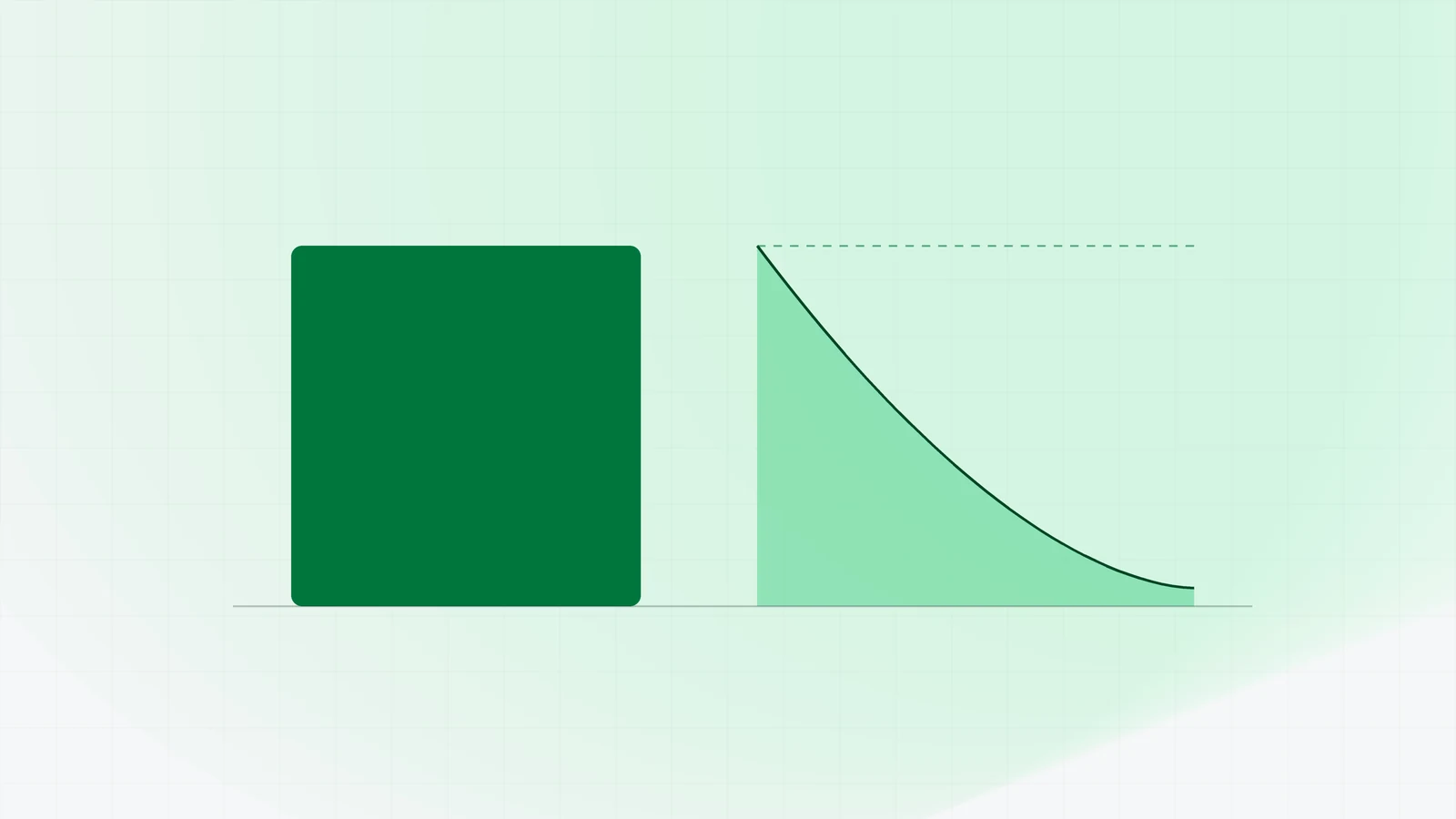
A 1.20 factor rate charges 20% of the amount borrowed as a flat cost, on the full $50,000 for the full term. A 20% p.a. interest rate charges 20% a year on a balance that falls with every repayment. Over 12 months of monthly repayments, the interest-rate version costs a little over half as much in dollars.
Interest is charged on a falling balance
With an amortising loan, each repayment is part interest and part principal. Interest for the month is calculated on the balance still owing, so as principal comes down, the interest share of each repayment comes down with it. Over a 12-month loan the average balance outstanding is roughly half the amount borrowed. You pay a rate, but you pay it on a shrinking number.
A factor rate is charged on the full amount for the full term
A factor rate ignores the balance. The lender multiplies the advance by the factor once, at the start, and that total is the contract. Whether you have repaid 10% or 90% of it, the cost does not move. In effect you keep paying for money you have already handed back. That is why the equivalent annual rate lands so far above the number after the decimal point.
What "20% of $50,000" and "20% p.a. on $50,000" each actually cost
Take the two side by side on $50,000 over 12 months, repaid monthly. The 20% p.a. figure is used here only because it shares the number; it is not a market rate.
20% of $50,000 (factor rate 1.20): $10,000, fixed. Twelve repayments of $5,000.
20% p.a. on $50,000 (interest rate): about $5,580 in interest on a reducing balance. Twelve repayments of about $4,630.
Same 20, a gap of about $4,400. And 20% p.a. is itself a high rate for a business term loan: the Reserve Bank's average rate on outstanding small business lending was 7.45% p.a. in June 2026 (RBA Statistical Table F7). A factor-rate product is priced for speed and risk; it is not a substitute for a bank term loan, and converting it is how you see the gap.
A factor rate charges the full amount for the full term. Interest is charged on the balance still owing, which falls with every repayment.
Worked example: $50,000 at a factor rate of 1.20
Every figure in this example is an invented illustration used to show the arithmetic. It is not a quote, not a market range and not 121 Brokers pricing. If a lender quoted a factor rate of 1.20 on a $50,000 advance:
Total repayable: $50,000 multiplied by 1.20 = $60,000.
Cost of credit: $60,000 less $50,000 = $10,000, fixed on day one.
Over 12 months in equal monthly repayments: $5,000 a month. Solving for the rate at which twelve $5,000 repayments are worth $50,000 today gives roughly 2.9% a month, which is roughly 35% p.a. nominal, or a little over 40% as an effective annual rate once compounding is counted.
Over 6 months: $10,000 a month. The same $10,000 cost now equates to roughly 65% p.a. nominal.
Over 3 months: $20,000 a month. The equivalent annual rate is well above 100%.
Two measures appear above because the industry uses both. The nominal figure is the periodic rate multiplied by the number of periods in a year; the effective figure compounds it. Whichever you use, use the same one on both sides of any comparison. A simple annualised figure (cost divided by amount, scaled to a year) gives 20% for the 12-month case, and it understates the real cost because it assumes you held the whole $50,000 for the whole year.
Enter your own amount, factor, term, repayment frequency and fees below and the converter does the solving for you.
Interactive calculator
Factor Rate to Interest Rate Converter
$
$1,000 to $5,000,000.
The amount offered before the origination fee is deducted.
1.05 to 1.60.
Calculator limits, not a market range.
1 to 36 months.
%
0% to 10%.
Deducted from the advance.
Effective annual rate (APR-style)
96.1%
Factor rate 1.25 reads as 25.0% of the advance.
Total repayable
$62,500
Origination fee
$1,000
Cash you receive
$49,000
Total cost of capital
$13,500
Repayment per business day (189 repayments)
$331
Simple annualised rate
36.0%
APR (nominal)
67.5%
The factor rate looks like 25.0% because it is charged on the full advance, but you start repaying on day one and hold on average only about half the money across the 9 months. Spread over the money you actually have, and the time you actually have it, the same cost is a much higher annual rate.
Simple annualised rate = total cost divided by the advance, divided by the term in years.
APR and effective rate are solved from the actual repayment stream with the fee taken off the cash received. Daily repayments assume 21 business days a month.
The pre-filled figures are illustrations, not typical or market pricing.
Estimate only, for general information. Not financial advice, a quote or an offer of finance.
Actual rates, fees and repayments are set by the lender and subject to approval and your circumstances.
The term is the trap
The trap is arithmetic, not anyone's conduct. Because the dollar cost is fixed, a shorter term does not save a cent; it means you pay the same $10,000 for the use of the money for less time. Here is the invented 1.20 example across four terms, each repaid in equal monthly instalments.
Term (monthly repayments)
Total repayable
Monthly repayment
Simple annual rate
Approximate equivalent annual rate (nominal)
3 months
$60,000
$20,000
80%
Roughly 115% to 120%
6 months
$60,000
$10,000
40%
Roughly 65%
9 months
$60,000
About $6,670
27%
Roughly 45%
12 months
$60,000
$5,000
20%
Roughly 35%
Read down the last column. The factor never moves, the cost never moves, and the equivalent rate more than triples between 12 months and 3. Shorter terms push the rate up because the same fee buys a shorter loan on a lower average balance. Weekly or daily debits push it a little higher again, since the balance falls faster still: on the 12-month case, weekly repayments of about $1,155 lift the nominal figure to roughly 37%. If an offer shows you a factor and a term but no annual rate, that last column is what is missing.
How to convert a factor rate yourself
You can do the first four steps with a pen. The last two are what a spreadsheet rate function, or the converter above, does for you.
Work out the total repayable. Multiply the amount advanced by the factor rate. $50,000 at 1.20 is $60,000.
Subtract the amount to get the cost. $60,000 less $50,000 is $10,000. This is the charge for the money before any other fees.
List every repayment on its date. Daily, weekly or monthly, and how many. Twelve monthly repayments of $5,000 and 52 weekly repayments of about $1,155 are not the same loan, even though they add to the same total.
Add every fee. Establishment fee, direct-debit or account fees, any early-payout fee. If a fee is deducted from the advance, reduce the amount you actually receive rather than adding it to the cost.
Solve for the rate per period. Find the periodic rate at which the stream of repayments equals the net amount you received. A spreadsheet rate function or the factor rate converter in this article will do it.
Annualise it. Multiply by the number of periods in a year for the nominal rate, or compound it for the effective rate, and write down which one you used before comparing it with an interest-rate quote.
Then compare the result with an interest-rate quote on the same amount over the same term, with its fees added in. Our loan comparison calculator lines up two or three interest-rate offers side by side once you have the converted figure.
Fees, early payout and the things a factor rate hides
The multiplier looks complete because it produces one round total. It is not complete. Three things sit outside it, and each one changes the true cost.
Establishment and direct-debit fees
An establishment fee is usually charged on top of the factor, either deducted from the advance or added to the repayments. In the invented example, a 2% establishment fee of $1,000 taken out of the $50,000 means you receive $49,000 but still repay $60,000. That lifts the 12-month equivalent rate from roughly 35% to roughly 39% nominal: three to four percentage points from a fee that looks small on the page. Weekly or monthly account-keeping and direct-debit fees do the same thing in smaller steps. Ask for every fee in dollars and add them at step 4.
Early payout: the cost does not shrink unless the contract says so
On an interest-rate loan, paying out early stops interest accruing, so the remaining cost falls (any early payout fee aside). On a factor-rate contract, the $10,000 was fixed at the start. Repay it in month 6 instead of month 12 and, unless the contract provides for an early-payout discount, you still owe the full $60,000 less what you have paid. Some contracts include a discount for early settlement and some do not. The only way to know is the contract, so read the early-payout clause before you count on it.
Daily or weekly repayments and cash flow
Factor-rate products are often repaid by daily or weekly direct debit or, on a merchant cash advance, by a holdback taken from each card settlement. The holdback itself is covered in our companion piece on whether the holdback maths suits your takings. For conversion purposes the point is simpler: the more frequent the debit, the faster the balance falls, and the higher the equivalent annual rate for the same dollar cost. Frequent debits also mean cash leaves before the week's takings have settled, which is a cash flow question as much as a cost one. If the need behind the offer is a gap that comes back every month or every season, our guide to matching a line of credit, overdraft or term loan to the shape of a cash flow gap covers the facilities built for that pattern.
Here is the invented $50,000 factor-rate loan set against a 12-month interest-rate term loan at an indicative 15% p.a. That rate is an illustration inside the 12% to 20% p.a. band we use across this series for unsecured term loans. Actual pricing across a lender panel depends on the file, the security offered and the lender.
On $50,000 over 12 months
Factor-rate loan at 1.20 (invented)
Term loan at an indicative 15% p.a.
How the cost is calculated
Amount multiplied by factor, once, at the start. Fixed in dollars.
Interest on the balance still owing, recalculated as it falls.
Cost if repaid on schedule
$10,000
About $4,150 in interest
Cost if paid out at month 6
Still $10,000, unless the contract provides a discount
Roughly $3,000 in interest accrued to that point, plus any early payout fee
With a 2% establishment fee added
$11,000 total cost; equivalent rate roughly 39% nominal
About $5,150 total cost; equivalent rate roughly 19% nominal
What you compare it with
Convert to an equivalent annual rate first, fees included
The annual rate plus fees, on the same term
Best used for
A short, specific need where the cost is weighed against a quick, known return
A need repaid over the full term from ongoing trading
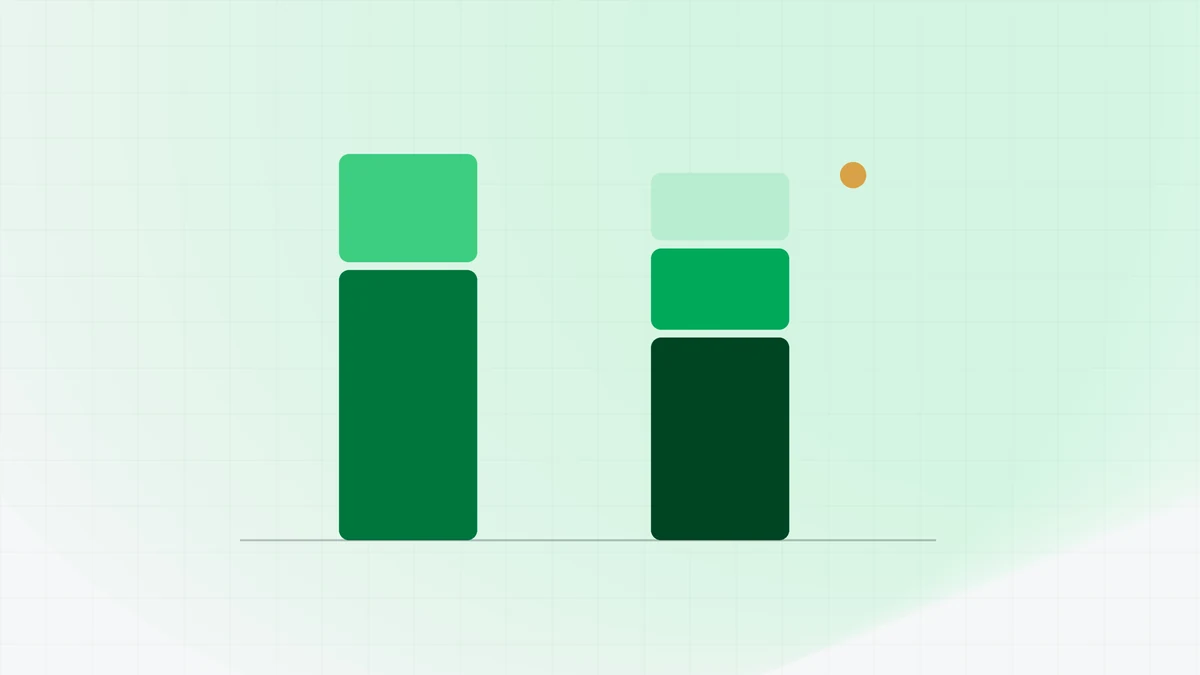
The right-hand column is not a recommendation. A term loan at that rate needs a file a lender will approve at that rate, and the factor-rate product may be the one actually available in the time you have. The column is there so that 1.20 and 15% p.a. are finally on the same footing. For a fuller decision method on the two products, see merchant cash advance vs business loan, compared side by side.
A factor rate is a price tag: the cost is fixed whatever happens next. Interest is a meter: it stops when the balance stops.
Which products use factor rates
In Australia you will meet a factor rate on two kinds of business-purpose finance.
Short-term unsecured business loans from online and non-bank lenders, usually with daily or weekly debits. Some of these are quoted with an interest rate instead, which is why it pays to ask which one the offer is written in.
Merchant cash advances, where the factor fixes the total and a holdback on card takings sets the speed of repayment.
Online lenders that sign AFIA's Online Small Business Lenders Code must give borrowers a standard loan summary showing the total repayment amount, the annual percentage rate and the simple annual interest rate before the loan is accepted; AFIA listed five member lenders with code-compliant products in September 2026, and is folding the code into its Finance Industry Code of Practice from 1 October 2026. If your lender is a signatory, the converted figure should already be on the summary. If it is not, ask for it, or run the conversion yourself.
On the legal side: business-purpose finance sits outside the National Credit Code, but the ASIC Act's unfair contract terms and unconscionable conduct rules still apply, and businesses with fewer than 100 employees can take complaints to AFCA. That is a description of the framework, not legal advice.
For context on what interest-rate products cost, our guides to average unsecured business loan interest rates in Australia and business loan interest rates in Australia cover the ranges lenders publish and what moves them.
What to do with an offer in your hand
Convert it. Write down the amount, the factor, every repayment date and every fee, and run them through the converter above. Then put the equivalent annual rate next to an interest-rate quote on the same amount and term. If the converted number surprises you, that is useful information rather than a reason to walk away on its own: the real question is whether the return on the money beats its cost in the time you have. 121 Brokers, a business finance brokerage, can price the same need across a panel so the comparison is between real offers, not between one offer and a guess; our article on why one enquiry to a whole lender panel beats walking into your bank explains how that works. Start with a scenario call and bring the offer letter; we will convert it with you.
General information only, not financial, tax or legal advice. 121 Brokers is a finance broker, not a lender. All factor rates, loan amounts and fees in this article are invented illustrations used to show the arithmetic; interest rates are indicative ranges, not quotes. Whether any facility is approved, and on what terms, is decided by the lender. Consider your own circumstances and speak to your accountant or adviser before entering any finance arrangement.
A factor rate is a multiplier applied to the amount you borrow to set the total you repay. At 1.20, a $50,000 advance means $60,000 back, a $10,000 cost fixed on day one. It is not an annual rate: it has no time period built in, and it does not fall if you repay early. Short-term unsecured loans and merchant cash advances are the products that usually carry one.
How do you convert a factor rate to an interest rate?
Multiply the amount by the factor to get the total repayable, subtract the amount to get the cost, list every repayment on its date, add any fees, then solve for the periodic rate that makes those repayments equal the amount you received, and annualise it. On $50,000 at 1.20 over 12 monthly repayments that is roughly 35% p.a. nominal. A spreadsheet rate function or a factor rate converter will do the solving; compare the result with an interest-rate quote on the same term, fees included.
Is a factor rate of 1.2 good?
There is no answer without the term. A factor of 1.20 costs 20% of the amount in dollars whatever the term, but that converts to roughly 35% p.a. over 12 months, roughly 65% over 6 months and well above 100% over 3 months, before fees. Judge it by the equivalent annual rate, fees included, against the other finance actually available to you in the time you have, not by the number itself.
Why do lenders use factor rates instead of interest rates?
A factor rate suits products where the total is fixed and the repayment speed can vary, such as a merchant cash advance repaid from a share of card takings. It also gives the borrower one plain dollar figure. The drawback is that it hides the cost of money over time, which is why lenders that sign AFIA's Online Small Business Lenders Code must also show an annual percentage rate on the loan summary.
Do I save money if I pay off a factor rate loan early?
Usually not by default. The cost was fixed at the start as amount times factor, so repaying in month 6 rather than month 12 leaves the same total owing unless the contract includes an early-payout discount. Some contracts do and some do not. On an interest-rate loan, early payout stops interest accruing, so the saving is built in, subject to any early payout fee. Read the early-payout clause before you rely on either.
Is a factor rate the same as APR?
No. APR (annual percentage rate) is an annualised interest rate that accounts for the balance falling as you repay, and usually for fees as well. A factor rate is a flat multiplier with no time component. The same factor produces a different APR for every term and repayment frequency, which is exactly why converting it matters before you compare it with an interest-rate loan.
What is the difference between a factor rate and a holdback?
On a merchant cash advance the factor rate sets how much you repay in total, and the holdback sets how fast. The holdback is the percentage of each day's card settlements the provider takes until the fixed total is cleared. Busier days repay faster and quieter days slower, but the total never changes. Test the holdback against gross profit, not takings: on a 65% margin a 12% holdback on takings is about 18% of gross profit.
Are factor rate loans legal in Australia?
Yes. Business-purpose finance sits outside the National Credit Code, so a factor-rate loan to a business is not consumer credit. It is still subject to the ASIC Act's unfair contract terms and unconscionable conduct rules and to Australian Consumer Law on how it is marketed, and businesses with fewer than 100 employees can take a complaint to AFCA. This is general information, not legal advice.