

Secured business loans
Compare secured business loans from our lender panel
A business loan backed by an asset you pledge, usually property. For owners with equity they can put to work.
An enquiry is a conversation, not an application. We won't submit anything to a lender without your say-so.

The basics
What can I use as security for a business loan?
Residential or commercial property is what lenders prefer: it is easy to value, holds value predictably, and generally unlocks the sharpest pricing and the largest amounts. Equipment, vehicles and other business assets can also secure lending, but they depreciate, so a lender lends less of their value and for a shorter time.
Two things decide whether an asset is usable: what it is, and your equity in it, the value minus whatever is already secured over it. A property with a mortgage can still work if there is equity left. A general security agreement is a third option: rather than one nominated asset, it gives the lender security over the business as a whole, and it is common even on facilities that would otherwise be called unsecured.

What security actually buys you
Pledging an asset moves risk from the lender to you, and the lender pays you for it in the terms it offers. Generally that means a sharper rate, a larger amount and a longer term than the same business would get unsecured. What you give up is speed, paperwork, the asset's availability for anything else, and the asset itself if it goes wrong.
| Feature | Secured | Unsecured |
|---|---|---|
| What backs the loan | A nominated asset, usually property | Your trading, plus a director guarantee |
| Who carries the risk if it fails | Largely the borrower. The lender can enforce its security | Largely the lender, which is why it prices for it |
| Effect on the rate offered | Generally lower, because the lender's exposure is lower | Generally higher, for the same reason in reverse |
| Effect on the amount available | Generally larger, bounded by your equity in the asset | Generally smaller, bounded by what your trading supports |
| Effect on the term | Generally longer, because the security outlasts the risk | Generally shorter |
| Valuation required? | Usually, for property. It is a third party's work, not ours | No |
| Title and encumbrance checks? | Yes | No |
| Paperwork | More. There is an asset to prove, value and check | Less. There is no asset to prove, value or check |
| What you give up | The asset is committed, and it is at risk on default | Nothing pledged, but you pay for that in price and size |
| Best suited to | Larger, longer commitments where a rate difference compounds: premises, a major expansion, refinancing dearer debt | One-off needs where the amount is modest and the asset is better left free |
Rates, amounts, terms and criteria are set by each lender and vary by lender, by facility and by the asset. This table describes how secured and unsecured lending generally differ in structure. It is not a comparison of any particular offer, and it is not a statement of what any lender will offer you.
So how much cheaper is secured, really?
We will not put a number on that, and you should be sceptical of anyone who does without seeing your file.
Not because it is a secret. Because the honest answer has too many variables to survive being averaged. The gap between a secured and an unsecured offer for the same business depends on the lender, the asset, your equity in it, your trading, your credit file and what the market is doing that month. That is why the only numbers on this page are dated third-party market observations with a named source, refreshed on a schedule, and why none of them is the gap between two offers on your file.
What is reliable is the direction and the mechanism, and those are worth more than a figure. A lender that can recover its money by enforcing security is exposed to less loss than one that cannot. Less exposure, less risk premium. That relationship holds regardless of what the market is doing, which is exactly what makes it worth telling you and what makes a point-in-time percentage not worth telling you.
Where it matters most is the part people miss. A rate difference is not a one-off saving. It compounds over the term, and the term is generally longer on a secured facility. So a modest gap on a short facility may be worth less than the paperwork it costs you, and the same gap on a long one may be the difference between a project that works and one that does not. That is arithmetic, and it is arithmetic we do with your actual numbers rather than an average.
And the trade is not only about price. A cheaper facility that ties up the equity you were going to use for premises next year is not a saving. It is a swap. Deciding what to pledge is a decision about your next three years, not about this month's rate.
Compare a secured offer against an unsecured one on your file, or read the full head-to-head in secured vs unsecured business loans.
Market context
What are typical secured business loan rates in Australia?
Reserve Bank of Australia data put the average rate on outstanding small business lending at 7.45% p.a. as at June 2026, with medium businesses averaging 6.17% p.a. Those are averages across existing loans, not offers: the rate on a new secured facility is set by the lender on your file and your security.
Advertised pricing sits nearby. As at 7 August 2026, Money.com.au's rate tables showed secured business finance from 7.49% p.a., with the lowest advertised bank products at 6.99% to 7.00% p.a. From-rates are the sharpest end of a lender's book, priced for its strongest files, which is why we compare options on your actual file rather than advertised from-rates.
Third-party market observations at the dates shown, not our rates and not an offer. Actual rates, amounts, advance levels and costs depend on the lender's assessment of your individual business, and we do not set lender pricing. 121 Brokers is a broker, not a lender.
How it works with a broker
A secured application has more moving parts than an unsecured one, because there is an asset to prove and value. Here is the shape of it, including the part that takes the longest.

-
You tell us once.
One conversation and one set of documents. What the money is for, what your trading looks like, which asset you are considering pledging, and what is already secured against it. If there is an existing mortgage, we need to know that at the start, not at assessment.
-
The asset gets valued.
This is the step that makes a secured application different, and it is the one nobody warns you about. For property, the lender generally needs a valuation from a valuer it accepts, plus a title check to confirm what is already claimed against the asset. That is a third party's work on a third party's schedule. Who pays for it varies by lender and by facility, and we will tell you which before you agree to anything.
-
We compare, and you choose.
We take your position to the lenders whose appetite fits it and compare what comes back: the rate, the fees, the term, what they will actually lend against your equity, and what the security documents require of you. We put it side by side, explain the trade-offs, and if you want to proceed we handle the paperwork with the lender you picked.
What lenders typically look for
Two assessments run at once on a secured application: one on your business, one on the asset. Each lender sets its own criteria for both and applies them to your file. What follows is the shape of what is usually assessed, so you know what to have ready. It is not a checklist you can pass.
-
An active ABN*
Some lenders also want GST registration, depending on the facility and the amount.
-
A trading history*
Most lenders want a minimum trading period even where security is offered. Security changes the price and the size of what is possible. It does not usually replace the need for a business to assess. That minimum differs by lender.
-
Revenue that services the repayment*
Security is the lender's fallback, not its plan. Lenders still want to see that the business can repay from trading, because enforcing security is the outcome nobody wanted.
-
An asset with clear title*
The lender needs to know exactly what is claimed against the asset and by whom. An existing mortgage does not rule it out. It changes what is available and it must be disclosed at the start.
-
Available equity in that asset*
Lenders lend against your equity, not the asset's value, and each sets its own limit on how much of that equity it will lend against. That limit differs by lender and by asset type.
-
A valuation the lender accepts*
Generally from a valuer on the lender's panel, not one you choose. This is the step that decides what the asset is actually worth for this purpose, which is not always what you think it is worth.
The risk you are taking on
What actually happens if you cannot repay
This is the part of a secured loan that the cheaper rate is paying for, so it deserves a straight answer rather than a footnote. If you pledge an asset and the loan defaults, the lender can enforce its security, which may ultimately mean the asset is sold to repay the debt. That is not a remote scenario invented by lawyers. It is the mechanism the whole product is built on, and it is the reason the rate is lower.
Read more
Nothing happens at the first missed payment. Default is a process, not a switch. Lenders generally explore hardship arrangements, restructures or refinancing first, because enforcing security is slow, expensive and the outcome nobody wanted, including them. The practical advice, and it is the most useful thing on this page: talk to the lender and to us early. Early is a conversation about options. Late is a conversation about consequences.
Can they take the family home? If you pledged it, yes, that is what pledging it means, and anyone softening that is not doing you a favour. Residential property including an owner-occupied home is commonly accepted as security for business borrowing, subject to equity and valuation. It is a genuinely different decision from pledging a commercial building or a piece of plant, because the downside is not confined to the business. Consider independent financial and legal advice before securing business borrowing against your home. Not as a formality: this is the decision on this page where a second opinion is worth what it costs.
Whose asset is it, exactly? If the property is jointly owned, or held in a trust, or your spouse is on the title, they are part of this decision and the lender will require them to be. That conversation is better had at your kitchen table than at a lender's request halfway through an application.
The question worth asking before you pledge anything. Not "can I service this?", because you would not be applying if you thought you could not. Ask instead: what would have to go wrong for me to miss this, and how likely is that? Losing your largest customer. A quiet season that runs long. An illness. If the honest answer is that a foreseeable event would put the asset at risk, that is not a reason to give up on the finance. It is a reason to look at a smaller facility, a different structure, or an asset whose loss you could absorb. That is a conversation we would rather have before an application than after one.
If what you are trying to do is get out from under debt that has already stacked up, the secured structure is often the one that prices it best, but the same warning applies with more force. Business debt consolidation sets out how to compare that properly.

Industries
Industries we help fund
Whatever you do, the finance that fits depends on how your business actually trades. These are some of the industries we arrange funding for, each with its own guide.
-

Agriculture & farming
Machinery, utes, inputs bought a season ahead, and repayments that can follow the harvest.
Agriculture finance -

Hospitality & cafés
Fit-outs, commercial kitchen gear, stock before the rush, and the quiet months in between.
Hospitality finance -

Retail & e-commerce
Buying stock before the season sells, fit-outs, and bridging supplier terms against your sales.
Retail finance -
Trades & construction
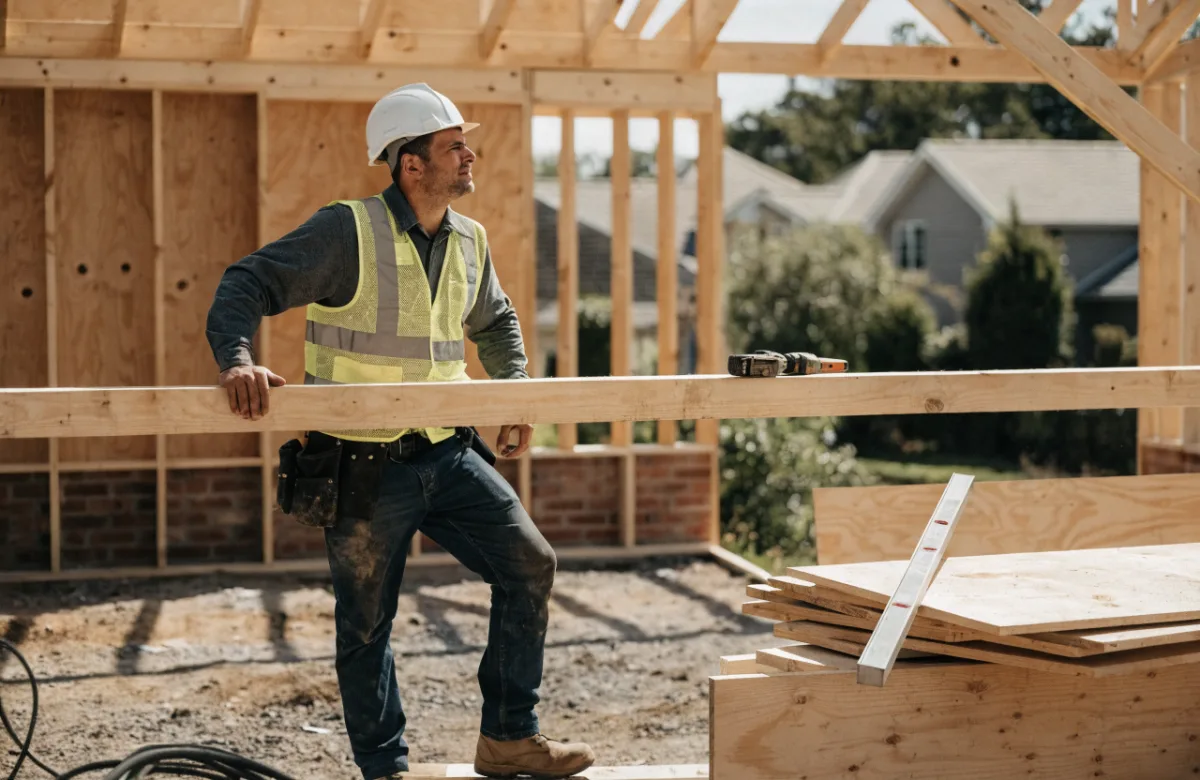
Tools, vehicles, materials up front, and bridging the gap between doing the work and being paid.
Trades & construction finance -

Health & allied health
Practice fit-outs, clinical equipment, hiring, and opening a second set of rooms.
Health finance -

Professional services
Hiring ahead of billings, office and technology, and bridging project-based invoicing.
Professional services finance -

Transport & logistics
Trucks and trailers, running costs, and carrying the gap between delivery and payment.
Transport & logistics finance












Customer stories
What business owners say about 121 Brokers
Testimonials reflect individual customers' experiences. Outcomes vary and depend on the lender and your circumstances.
121 Brokers Pty Ltd (ABN 37 674 323 712) is a finance broker, not a lender. We arrange finance through third-party lenders. Approval, interest rates, fees, timing and the funds themselves are set and provided by the lender, not by 121 Brokers.
FAQs
Secured lending questions, answered straight
Secured vs unsecured business loan: which is better?
Neither. They price different risks. Secured lending generally wins on rate, amount and term because the lender's exposure is lower. Unsecured wins on paperwork and on keeping your assets free for something else. If you hold usable equity and the need is not urgent, secured is usually the cheaper money. We will show you both rather than push you down one.
The full comparison is in the table above, and the head-to-head is covered in depth in secured vs unsecured business loans.
How much can I borrow with a secured business loan?
It depends on two things at once: your equity in the asset, and what your trading can service. Lenders lend against equity rather than against the asset's value, and each sets its own limit on how much of that equity it will lend. A larger asset does not help if the repayment is not serviceable. We will give you a realistic figure once we have seen both sides.
Are secured business loan rates lower than unsecured?
Generally yes, and the reason is the whole point of the product: a lender that can enforce security against an asset is exposed to less loss than one that cannot, so it charges a smaller risk premium. How much lower depends on the lender, the asset, your equity and your trading. We are a broker, not a lender, so we do not set rates, and any figure on this page is a dated third-party market observation, not ours and not an offer.
Who arranges and pays for the valuation?
The lender generally arranges it, using a valuer it accepts rather than one you choose, because it needs a valuation it can rely on. Who bears the cost varies by lender and by facility, and so does whether it is payable upfront. We will tell you which applies to the options we put in front of you before you agree to anything.
Put your equity to work, at a price worth the risk.
Tell us the asset and the amount. We will bring back what the panel would do with your file, what it would cost across the whole term, and what the security documents would actually require of you. Then you decide.
An enquiry is a conversation, not an application. We won't submit anything to a lender without your say-so.