RBA Rate Rise to 4.60%: What It Means for Your Business Loan Repayments
By 121 Brokers Team, Commercial finance brokerage
· 15 min read
· Published
The Reserve Bank of Australia (RBA) raised the cash rate to 4.60% on 29 September 2026, its fourth increase this year and a total of 100 basis points since February. For a business on a variable rate, each 25 basis points adds $250 a year in interest per $100,000 owed interest-only, and a little less on a principal and interest loan.
This guide shows how to work out your own number. Below is a worked example on an invented $250,000 loan, a calculator for your own balance, and a table of which facilities move and which do not. Nothing here is a quote.
What did the RBA decide on 29 September 2026?
On 29 September 2026 the Reserve Bank of Australia raised the cash rate target by 25 basis points to 4.60%, its fourth rise of 2026, in a unanimous decision. AAP reported on 6 October 2026 that it took the cash rate to its highest level since 2011. Variable-rate business loans, overdrafts and lines of credit reprice when lenders respond.
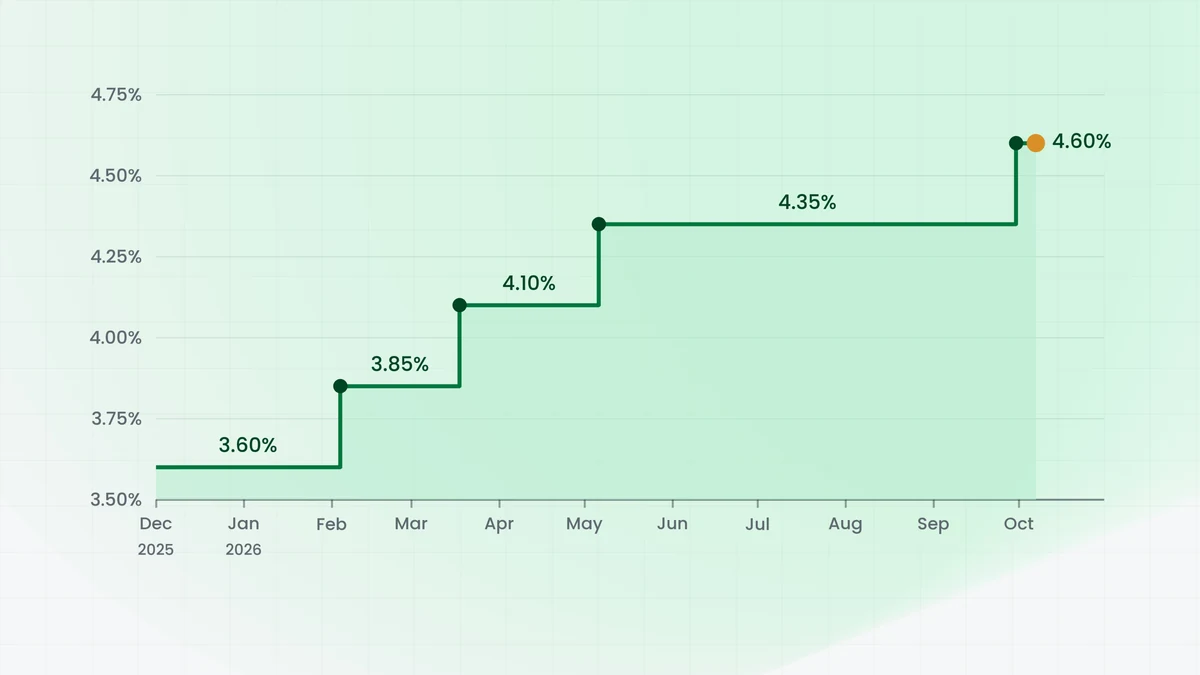
A basis point is one hundredth of a percentage point, so 25 basis points is 0.25 percentage points. The cash rate is the RBA's target for the overnight rate banks charge each other, and lenders price business loans above it. The RBA's cash rate target table shows four increases in 2026, each of 25 basis points, taking the rate from 3.60% to 4.60%:
4 February 2026: 3.60% to 3.85%
18 March 2026: 3.85% to 4.10%
6 May 2026: 4.10% to 4.35%
30 September 2026 (decision announced 29 September): 4.35% to 4.60%
Two lines in the statement matter for business borrowers. The RBA's Monetary Policy Board statement of 29 September 2026 said that growth in business investment and debt is strong, and that liaison indicates firms are experiencing cost pressures. On the path ahead, the same statement said: "The Board will continue to do what it considers necessary to bring inflation sustainably back to target, including increasing the cash rate target further if needed." That is what the Board said it would consider, not a statement of what will happen.
121 Brokers, an Australian business finance broker based in Byron Bay NSW, arranges business purpose finance across a panel of lenders; it does not set rates.
Four rises of 25 basis points in 2026 took the cash rate target from 3.60% to 4.60%. Source: RBA cash rate target table.
When do business loan rates go up after an RBA decision?
Lenders set their own rates and timing. A cash rate change is not passed on automatically, in full, or on the same day. Your loan contract says how much notice the lender gives before a variable rate changes, and your statement or online banking shows the rate you are on now. As a broker, 121 Brokers does not set rates.
In practice the gap between the RBA's announcement and a change on your statement can be days or weeks. A lender may pass on the full 25 basis points, pass on less, or reprice one product and not another. The reliable source is the notice your lender sends.
Variable, fixed and interest-only: which facilities reprice
A variable-rate facility reprices whenever the lender changes its rate, in either direction. A fixed-rate loan holds its rate until the fixed period ends, then moves to a revert rate, which is the variable rate the lender sets on that day. An interest-only balance, where you pay the interest each month and the amount owed stays the same, feels the whole change every month because nothing is being repaid. If a fixed period on one of your loans ends in the next year, our guide to whether to fix your business loan rate now covers what happens at that date.
The cash rate is the overnight rate between banks, not a lending rate. A business loan rate adds the lender's own funding cost, a margin for the risk of the particular borrower, and the cost of running the loan. RBA Statistical Table F7 (July 2026 data, published 7 September 2026) put the average rate on outstanding small business loans at 7.46% p.a., before the September rise, against a cash rate of 4.35% at the time. That gap of 311 basis points (our arithmetic) is funding, risk and operating cost rolled together.
How much does a 0.25% rate rise add to business loan repayments?
A 25 basis point rise adds $250 a year in interest for every $100,000 owed on an interest-only facility such as a drawn line of credit. On a principal and interest loan the extra is slightly less because the balance falls each month. On an invented $250,000 loan over 48 months at an illustrative 9.00%, it is $29.72 a month.
All figures in this example are invented illustrations, not quotes. The $250 per $100,000 is plain arithmetic: $100,000 multiplied by 0.25%. The 9.00% is the calculator's illustration rate, above the RBA's 7.46% average for July 2026 because that average blends secured and unsecured lending.
At 9.00% the repayment is $6,221.26 a month. At 9.25% it is $6,250.98. The difference is $29.72 per repayment: $29.72 a month, $356.63 a year, and $1,426.53 in extra interest over the remaining 48 months. The balance and the term do not change, so every extra dollar is interest.
Now run your own. Take the balance, rate and remaining term from your latest statement and enter them below. Use the +100 chip to see the four 2026 rises together. Switch to interest-only if the facility is a drawn line of credit or overdraft, and try fortnightly if that is how you pay.
Interactive calculator
Rate Rise Repayment Calculator
$
$1,000 to $10,000,000.
What you still owe today, or the amount drawn on a line of credit or overdraft.
%
0.10% to 40.00%.
The 9.00% default is an illustration, not a market rate. Use the rate on your own facility.
1 to 360 months.
bp
-200 to +300 basis points. 100 basis points is 1.00%.
A negative number models a cut.
Change per month
$29.72more
A +25 basis point change takes the rate from
9.00% to
9.25%.
Repayment now
$6,221.26
Repayment after the change
$6,250.98
Difference per month
$29.72
Difference per year
$357
Extra interest over the remaining term (48 repayments)
$1,427
Five scenarios on the same balance and term. Your chosen change is highlighted.
Change
Per month
Per year
+25 bp
+$29.72
+$357
Assumes the lender passes on the full change from today. Lenders set their own rates and timing.
Principal and interest repayments are re-solved on the same balance and remaining term, so every extra dollar over the term is interest.
Interest-only is the drawn amount times the rate for the period. A line of credit balance that moves will give a different figure.
The +100 scenario is the sum of the four 25 point rises in 2026 (February, March, May and September). The +125 scenario adds one more.
The pre-filled balance, rate and term are illustrations, not typical or market pricing.
Estimate only, for general information. Not financial advice, a quote or an offer of finance.
Actual rates, fees and repayments are set by the lender and subject to approval and your circumstances.
The figures assume the lender passes on the full change from today; lenders set their own rates and timing. For a month-by-month schedule on any loan, use the full repayment schedule calculator.
What have the four 2026 rate rises added in total?
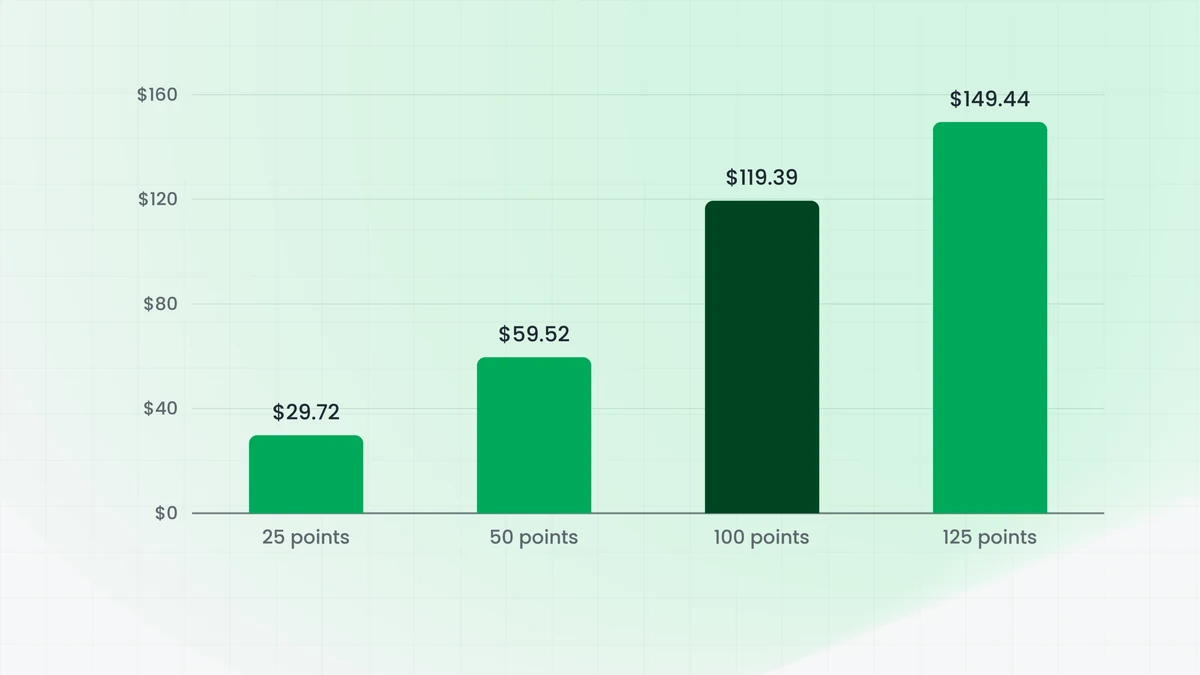
Between 4 February and 30 September 2026 the RBA raised the cash rate four times, from 3.60% to 4.60%, a total of 100 basis points. Where a lender passed every move on in full, that is $1,000 a year in interest per $100,000 owed interest-only. The table below shows what 25, 50, 100 and 125 points add to the example.
The table uses the same invented example: $250,000 at the 9.00% illustration rate, 48 months, monthly principal and interest.
What each rate change adds on the invented $250,000 example
Rate change
Per month on the $250,000 example
Per year on the example
Per $100,000 owed interest-only, per year
25 points lower (if a cut came)
$29.63 less
$355.62 less
$250 less
25 points higher (the September 2026 rise)
$29.72 more
$356.63 more
$250 more
50 points higher
$59.52 more
$714.28 more
$500 more
100 points higher (the four 2026 rises)
$119.39 more
$1,432.62 more
$1,000 more
125 points higher (one more 25 point rise on top)
$149.44 more
$1,793.31 more
$1,250 more
The extra per 25 points creeps up slightly as the rate rises, because more of each repayment is interest at a higher rate. The 125 point row has not happened; it is a stress case, one more rise on top of the four. The lower row is there because the next move could be in either direction.
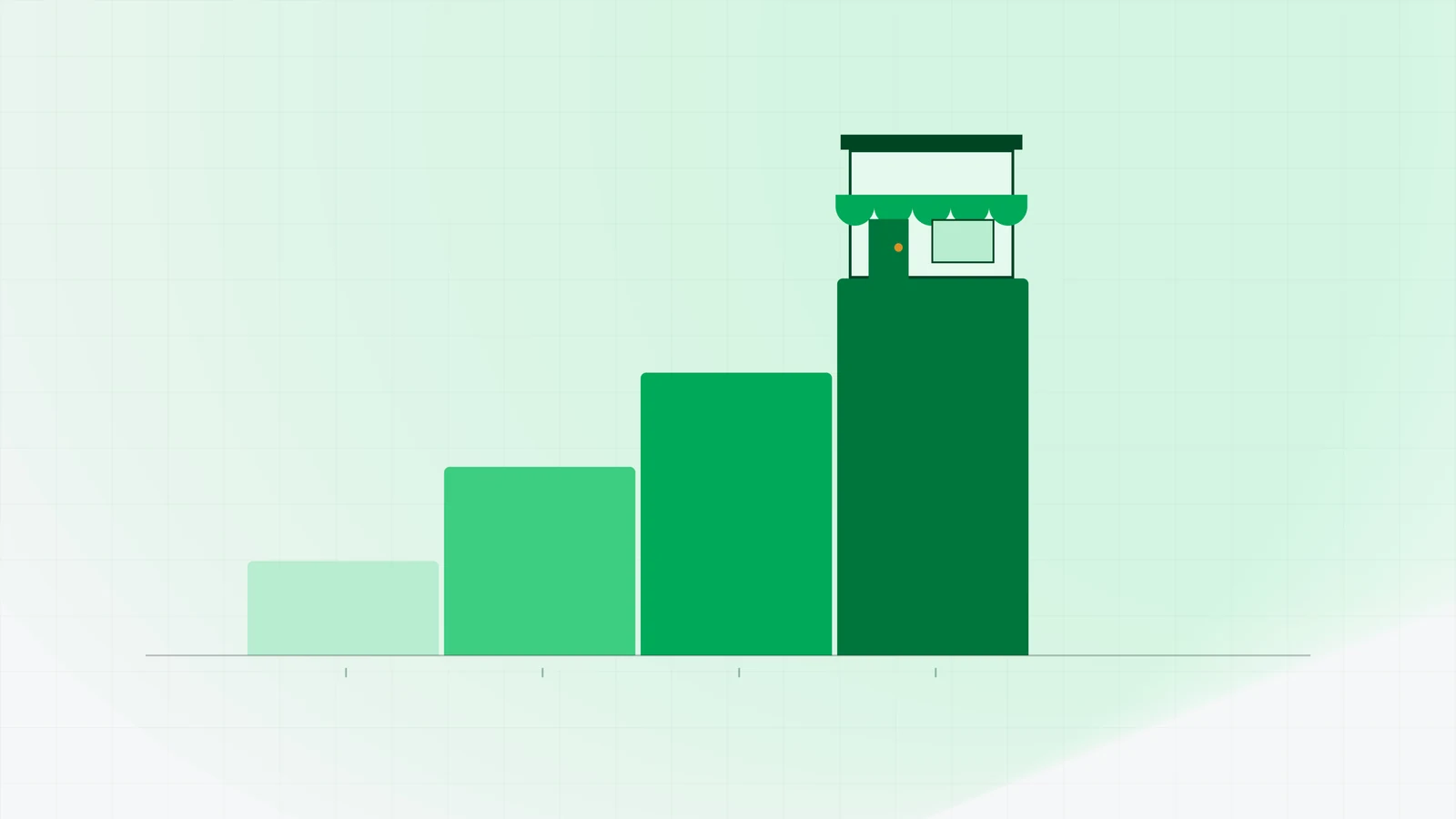
Extra per month on the invented $250,000 example. The 100 point bar is the four 2026 rises together.
Does a rate rise change an interest-only line of credit or overdraft?
Yes, and often by more per month than a term loan of the same size. On an interest-only facility the whole balance keeps attracting interest, so 25 basis points on a drawn $250,000 line adds $52.08 a month (plain arithmetic). Interest is charged on the drawn amount only; line fees on the undrawn limit are set separately by the lender.
Here is the same $250,000 in the calculator's interest-only mode. A 25 basis point rise adds $52.08 a month, or $625 a year. The four 2026 rises together, 100 basis points, add $208.33 a month, or $2,500 a year.
Compare that with the principal and interest figure of $29.72 a month from the first example. Over 48 months the interest-only extra at 25 points is $2,500, against $1,426.53 on the term loan, because on a line of credit nothing is being repaid. A drawn overdraft works the same way.
Does the RBA rate rise affect every type of business finance?
No. A cash rate rise flows through to variable-rate facilities: most term loans, overdrafts and lines of credit. Fixed-rate loans, and many equipment finance contracts written at a fixed rate, hold their rate until the fixed period ends. Invoice finance is priced by fee and margin, and a merchant cash advance uses a fixed factor rate, so neither moves automatically.
Check each contract. The table covers the common business facilities. "Moves with the cash rate" means the rate basis is variable and the lender has chosen to move; no lender is obliged to pass on any change, in either direction.
Which business finance facilities move with the cash rate
Should I refinance or consolidate my business loans after a rate rise?
Only if the new facility costs less over its life once fees, break costs and the new term are counted, not just a lower headline rate. A rate rise is a reasonable prompt to compare, because every lender reprices differently. Use the calculator below with two written quotes. A broker can bring back quotes from a panel in one pass.
There are three broad responses, and each has a cost and a check attached.
Keep the facility and ask for a reprice. It costs nothing to ask. Have a competing written quote in hand before you do, because that is what moves the conversation. The lender decides whether to agree.
Refinance one facility. Count the establishment fee on the new loan, any break cost if the old loan is fixed, and whether the term resets. A longer term can lower the monthly figure while increasing the total interest paid.
Consolidate several facilities into one.Debt consolidation gives one repayment, often over a longer term, so a lower monthly cost can mean more interest over the life of the debt. Our debt consolidation page explains how it works, and our FAQ covers which business debts can be rolled in and whether we can review your finance later.
To compare properly, enter your current facility as option A and two written quotes as options B and C below. Use the same amount and term for all three, with fees included, so the comparison is like for like.
What can a business do this month about higher repayments?
There are five practical steps, and none commits you to anything. Find the rate and repayment type on each facility, run the new repayment in the calculator above, and check each contract for notice periods. Then compare at least one written alternative quote, and talk to your accountant before changing structure; a broker can do the comparison legwork.
Find the rate and repayment type on each facility. Your latest statement or online banking shows both. Write them down facility by facility, because the rates rarely match.
Run the new repayment. Use the calculator above for each variable facility, then add them up. For the whole-business view, including a cash buffer check, use our rate rise cash flow check.
Check each contract. Look for the notice period before a variable rate change and the end date of any fixed period. The end date is when a fixed loan catches up with the market.
Talk to your accountant before changing structure. Refinancing, consolidating or fixing changes the shape of your debt, and the tax and cash flow effects are yours to weigh with your adviser.
If you want the comparison legwork done, 121 Brokers can take one set of documents to a panel of lenders and bring back written quotes; start with a scenario call. For the application side, from documents to settlement, our guide to how to get a business loan in Australia covers the process.
What economists expect next, and why it is not a promise
Figures in this section are as at 7 October 2026 and are reviewed after each RBA meeting; the next is 2 to 3 November 2026.
Nobody knows the next move. On 4 October 2026 the Australian Financial Review's quarterly survey of 37 economists found the broad view was a first cut in November 2027, while 16 of the 37 expected at least one more rise. ANZ forecast a rise to 4.85% in November 2026; Commonwealth Bank and NAB forecast no change. These are dated forecasts, not promises, and the calculator's 25 points lower chip exists for that reason.
The same survey showed how wide the range of views is. Of the 37 economists, 21 expected the next move to be down, while eight expected no cut before 2028. The Australian Financial Review's report of 4 October 2026 also noted that financial markets priced roughly a one-in-four chance of a rise in November 2026.
The RBA's own statement of 29 September 2026, quoted above, said the Board would do what it considers necessary, "including increasing the cash rate target further if needed". That keeps both directions open. Whichever way it goes, the calculator above shows the dollar effect of either direction on your own balance, which is the number a business can plan around.
General information only, not financial, tax or legal advice. 121 Brokers is a finance broker, not a lender. The loan amounts and rates in the worked examples are invented illustrations and the calculator's default rate is an illustration, not a quote or a market rate. Lenders set their own rates and decide whether and when to pass on a cash rate change. Forecasts quoted are the dated views of the people and organisations named, not predictions by 121 Brokers. Whether any facility is approved, and on what terms, is decided by the lender. Consider your own circumstances and speak to your accountant or adviser before changing any finance arrangement.
The Reserve Bank of Australia's cash rate target has been 4.60% since 30 September 2026, set at the Board's meeting on 29 September. The next Monetary Policy Board meeting is on 2 to 3 November 2026. This article is reviewed after every RBA meeting.
What is a basis point?
A basis point is one hundredth of a percentage point. A 25 basis point rise lifts a rate by 0.25 percentage points, so a loan at 9.00% that moves in full becomes 9.25%.
Does a fixed-rate business loan change when the RBA raises rates?
No. A fixed rate holds for the fixed period regardless of RBA decisions. When that period ends the loan usually reverts to a variable rate set by the lender at the time, which is when a rate rise catches up.
Do business loan rates go up by the same amount as the cash rate?
Not necessarily. Lenders decide how much of a cash rate change to pass on, and when. Some pass it on in full, some in part, and the change can differ between a term loan and an overdraft at the same lender.
Will the rate rise affect a business loan I am applying for now?
It can. A quoted variable rate is usually the lender's rate at the time of the quote, not a locked rate, so it may change before settlement. Ask the lender in writing how long the quote holds and whether a rate hold is available.
How do I find out what interest rate my business loan is on?
Your latest loan statement or online banking shows the current rate and the repayment type. If the facility is through a broker, ask them to confirm it with the lender. Check the rate on every facility separately, because they rarely match.
Does a rate rise change a merchant cash advance?
Not during the advance. A merchant cash advance uses a fixed factor rate agreed at the start, so the amount repayable does not change with the cash rate. A new advance taken after the rise may be priced differently.
Can I ask my lender for a lower rate after a rate rise?
Yes. Lenders can reprice an existing facility and some do when asked, especially with a competing written quote in hand. There is no obligation on them to agree, so treat the request as a comparison exercise, not an outcome.